Waveguide vs Birdbath vs Pancake: Near-Eye Display Architectures
Choosing a near-eye architecture is the first and most consequential decision in AR/VR optical design. Waveguide, birdbath, and pancake optics each make a different bargain between field of view, eye box, brightness, efficiency, and how thin and light the device can be. There is no universally best choice, only the best fit for a product.
Waveguide
Waveguides couple light from a small projector into a thin, transparent substrate, bounce it through total internal reflection, and couple it out in front of the eye, often expanding the exit pupil along the way. Their defining advantage is a thin, glasses-like see-through form factor, which is why they dominate lightweight AR smart-glasses.
The trade-offs are real: optical efficiency is typically low, so the projector must be bright; field of view is constrained; and color uniformity and stray artifacts (the "rainbow" effect in diffractive waveguides) are hard engineering problems. Waveguides are also the most difficult and expensive to manufacture well.
Birdbath
A birdbath combines a beamsplitter and a partially reflective curved mirror to fold the display into the eye. It delivers better efficiency and color than a waveguide and a wider field of view at moderate cost, which is why it appears in many mid-range AR headsets and viewers.
The cost is bulk: the beamsplitter and combiner take space, so birdbath devices are thicker and heavier than waveguide glasses. They are see-through but visibly bulkier, making them better suited to enterprise and media headsets than all-day wear.
Pancake
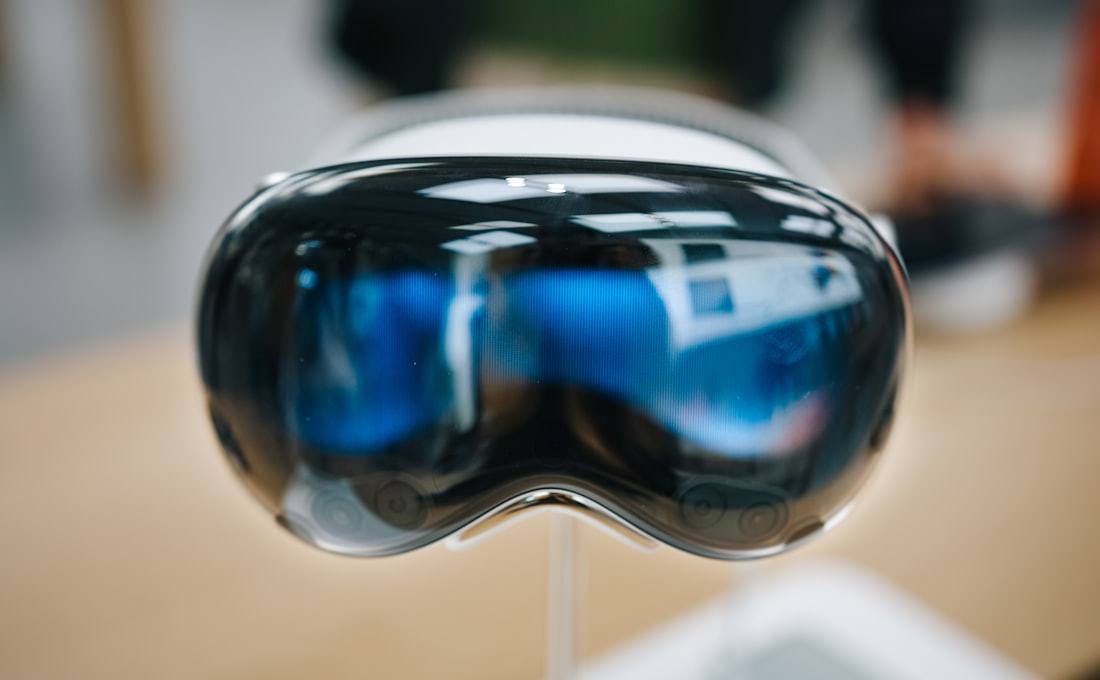
Pancake optics fold the light path back on itself using polarization and a half-mirror, collapsing a long optical path into a thin stack. This is the architecture behind the newest generation of compact VR headsets, delivering a wide field of view in a much shorter package than a traditional refractive VR lens.
The trade-off is efficiency: the polarization folding discards a large fraction of the light, so the display must be brighter to compensate. Pancakes are used for immersive (non-see-through) VR and mixed reality rather than transparent AR.
How to choose
The decision follows the product, not a ranking:
- lightweight, all-day see-through AR glasses point toward waveguides, accepting efficiency and field-of-view limits for the form factor;
- enterprise or media AR that tolerates more bulk favors birdbath for better image quality at lower cost;
- immersive wide-field VR and mixed reality favor pancake for a compact headset.
Eye box, brightness budget, microdisplay choice, and manufacturability then refine the selection. PAO runs an architecture trade study against your field-of-view, eye-box, efficiency, and form-factor targets, then designs the near-eye optics for the chosen path. See AR/VR optical design and custom optical design for how an engagement runs from architecture through prototype.